
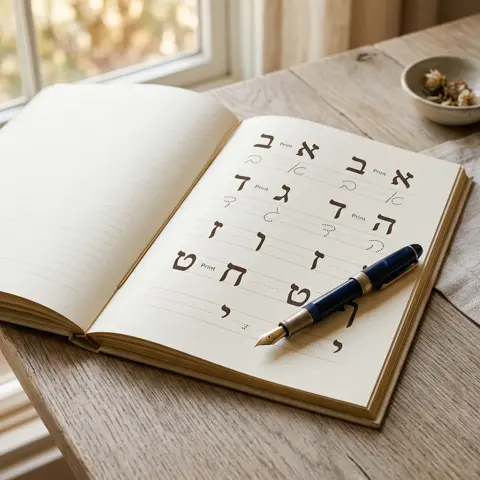
 PDF + Audio
Beginner
Hebrew Alphabet & Cursive Workbook
Master print and cursive writing with step-by-step stroke guides and drills.
By Elisahar, native Hebrew speaker 6 min readUpdated November 4, 2026
Quick answer
The Hebrew alphabet (the alef-bet) has 22 letters, all consonants, and is read from right to left. Five letters take a different shape at the end of a word, and there are no capital letters. Most learners can recognize every letter within 1–2 weeks of short daily practice.
Tap the speaker next to a Hebrew word to hear it. Words without a native recording yet use your device’s Hebrew voice.
Hebrew is written and read from right to left. The 22 letters are consonants. Vowels are shown with small dots and dashes called nikud, which appear in children’s books, prayer books and learner materials, but not in most everyday writing. Hebrew has no capital letters, so every letter has just one printed shape (plus a final form for five of them).
| Letter | Name | Sound |
|---|---|---|
| א | Alef | silent / carries a vowel |
| ב | Bet / Vet | b / v |
| ג | Gimel | g |
| ד | Dalet | d |
| ה | He | h |
| ו | Vav | v (or vowel o / u) |
| ז | Zayin | z |
| ח | Chet | kh (throaty) |
| ט | Tet | t |
| י | Yod | y (or vowel i) |
| כ | Kaf / Khaf | k / kh |
| ל | Lamed | l |
| מ | Mem | m |
| נ | Nun | n |
| ס | Samekh | s |
| ע | Ayin | silent / carries a vowel |
| פ | Pe / Fe | p / f |
| צ | Tsadi | ts |
| ק | Kuf | k |
| ר | Resh | r |
| ש | Shin / Sin | sh / s |
| ת | Tav | t |
Five letters change shape when they come at the end of a word. The sound stays the same, only the shape changes. Learn them right after the main 22 letters:
Most beginner reading mistakes come from a few pairs of letters that look almost the same. Practice them side by side until you can tell them apart instantly:
Print (block) letters are what you see in books, signs and on screens, so learn to read print first. Israelis, however, handwrite in cursive, which looks quite different. If you want to take notes or write by hand, learn cursive as soon as you can read print. It is faster to write and is what you will see in handwritten notes from Israelis.
Short, daily sessions of 15–20 minutes work far better than one long session a week. Say each letter’s sound out loud as you write it.
Prefer video? Watch more Hebrew lessons on the Hebrew With Elisahar YouTube channel.
Not sure where to start? Take the free level test.
PDF + AudioMaster print and cursive writing with step-by-step stroke guides and drills.
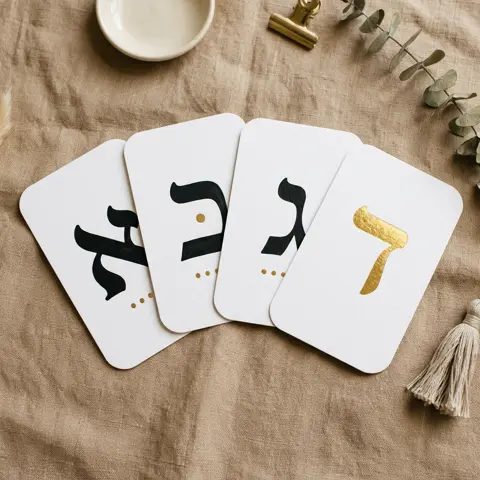 Kids Friendly
Large, clear letter cards for all 22 letters plus the 5 final forms — one big letter on every card.
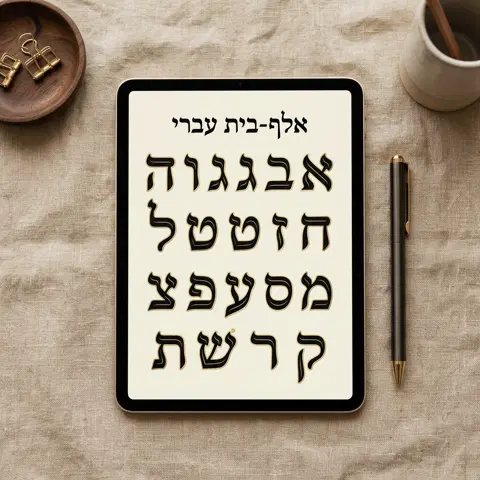 iPad Ready
A hyperlinked tablet workbook for practising every Hebrew letter — trace, write and read practice words with an Apple Pencil or stylus.
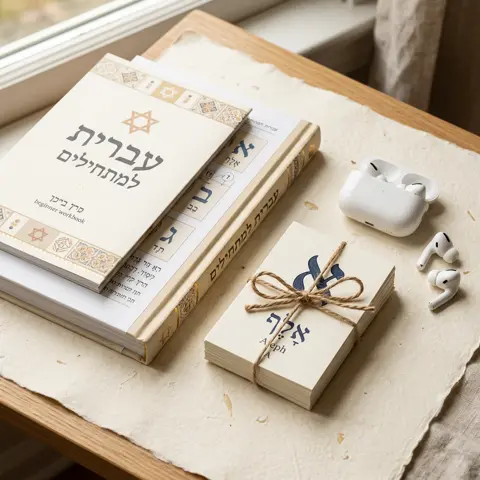 Complete Starter Kit
Includes Beginner Workbook, 200 Flashcards Set, and Pronunciation MP3 Audio Guide.